Thursday, August 28, 2008

The Baseball Project -- Vol. 1: Frozen Ropes And Dying Quails (2008)

The Baseball Project -- Vol. 1: Frozen Ropes And Dying Quails (Yep Roc)

Years ago, I was at the Fireside Bowl to see the band Wax. Some of you may remember Wax, a pop-punk band that had a minor hit single "California", with the Spike Jonze video featuring a man on fire, in slow motion, running to catch a bus.

I used to work with Wax’s bass player, Dave Georgeff, at the Sound Warehouse Records. I dug the music and wanted to support my pal, and found it charming that a large contingent from Dave’s family was standing off to the side, while the area in front of the stage was teeming with teenage punkers.

Before Wax came on, a large bearded man strolled in, and was quickly surrounded by the men of the Georgeff clan. Who commanded the attention of these older gents? None other than former Chicago White Sox star pitcher Black Jack McDowell, who put out some credible rock records of his own back in the day.

Baseball may no longer be the most watched American sport, but it’s still the National Pastime. The rich history of the sport insures that it will always be a part of American folklore. And there have been some good rock songs about baseball, such as Jonathan Richman’s "Walter Johnson" and the Hoodoo Gurus "Where’s That Hit".

But there haven’t been enough good songs about baseball. The Baseball Project aims to right this wrong, and they do so with the control of Greg Maddux. Steve (Dream Syndicate) Wynn and Scott (Young Fresh Fellows, The Minus Five) McCaughey are major fans who have written some swell baseball songs, and they get great support from Peter (R.E.M.) Buck and Linda Pittmon, who pounds the skins for Wynn’s current band.

I knew that Wynn was a baseball guy from his debut album’s terrific "Kerosene Man". I don’t know if McCaughey has any baseball songs in his past, but the two show a mastery of the history of the game. And since they are already bona fide songwriters, it’s no shock that this is an entertaining album.

Whether this will translate to folks who aren’t baseball fans, I’m not sure. But if you’ve pored over the works of Bill James, Roger Angell, Rob Neyer, Jim Bouton and Lawrence S. Ritter, you finally have a soundtrack.

The album has a bit everything. There’s the sentimental "Sometimes I Dream of Willie Mays", with McCaughey’s looking back at his first baseball game and the Say Hey Kid’s storied past and quiet career twilight. This warm song is contrasted by "The Yankee Flipper". This is another McCaughey tune, a slow jangler about the day Black Jack McDowell gave the finger to Yankee Stadium after a poor outing. McCaughey claims that McDowell had an excuse -- he spent a late night out with McCaughey and Mike Mills of R.E.M.

Wynn takes up the cause of Curt Flood, the man who took baseball to the United States Supreme Court, on "Gratitude (For Curt Flood)". Flood protested the reserve clause, which contractually bound players to a team for perpetuity. Less than a decade after his challenge, the reserve clause was ruled illegal, leading to free agency and the big money contracts of today. Wynn bitterly notes how today’s players don’t pay tribute to Flood over dramatic music.

I’ve already gotten too carried away with the lyrical content. What about the music? Well, it pretty much sounds like what you’d expect from Wynn and McCaughey, full of rootsy music, a bit of twang, some power chords, and full of sincerity. To put it another way -- if you scrubbed out the baseball lyrics and replaced them with love songs and political diatribes, it would still be a swell album. Just not quite as unique.

In keeping with a baseball tradition, I’m going to bestow two awards. First, the Cy Young Award for best song about a pitcher goes to "Harvey Haddix". This Pittsburgh hurler allowed no baserunners in 12 innings in a 1959 tilt against the Milwaukee Braves. Sadly, his fellow Bucs couldn’t scratch, and the Braves scored and won the game. The kicker -- because Haddix did not finish the game without allowing a baserunner, the official records don’t list the best pitching performance in history as a perfect game.

Wynn manages to lace a bit of indignation into this folk rock slice of story telling, stating Haddix’s case for immortality. He couldn’t have a better advocate.

The Most Valuable Player Award goes to "Ted Fucking Williams". This cut is simply awesome, with a glam rock beat laid down by Pittmon. Williams was arguably the greatest hitter of all-time, and would refer to himself as TFW when taking batting practice. Wynn looks at what Ted must have felt about other stars got more adulation, when he had more ability, despite his prickly personality. Wynn also offers this does of imagined wisdom from The Splendid Splinter: "But failure is not a sign of grace/it only means you don’t know what you’re doing." Fun head bopping music and insightful lyrics -- an unbeatable combo.

I won’t go so far to say that this is a great album, as there are a few songs that aren’t as interesting musically as they are lyrically. But the batting average here is extremely high, which should ensure that The Baseball Project is signed for another season.

Thursday, August 21, 2008

Erykah Badu -- New Amerykah Part One (4th World War) (2008)

Erykah Badu -- New Amerykah Part One (4th World War) (Universal Motown)

On her first two albums, Badu showed off considerable talent as one of the wave of great performers of the neo-soul movement that started in the late-‘90s. She’s a beguiling vocalist, who doesn’t dazzle with her range, instead letting her phrasing and songwriting impress.

As good as her first two albums were, they provided no preparation for this ambitious, exciting effort, which was years in the making. Badu raises the stakes both musically and lyrically, making an album that perfectly melds the golden age of funk with modern hip-hop, while getting up on her soapbox to report what’s going on in the world around her.

At certain points, the politics border on strident, but the extremely compelling music, along with the justified anger that supports her commentary, keep this from merely being an exercise in polemics.

The album gets off to a thrilling start with a scintillating version of Roy Ayers’s “Amerykahn Promise”, produced by the veteran funkmeister himself. This song percolates with guitar and percussion accents, sounding like the theme from a cult blaxploitation flick, Badu singing up a storm (think back to the early, funky Natalie Cole of “Sophisticated Lady”) while Ramp, a deep voiced narrator, adds an array of interesting observations.

The album then shifts gears into low key finger snapping funk on “The Healer”, produced by Madlib (a known Roy Ayers sampler). Badu sings in a soft girlish voice, in a call-and-response with a distant children’s chorus. This song is about reconnecting with African roots and fighting back, and it entices rather than overwhelms.

The contrast between hot-and-cool sustains this album, as Madlib, producer Shafiq Husayn and others take turns helping Badu put together some terrific backing tracks, almost always topped off by smooth melodies that bring back the best of ‘70s soul.

The album reaches a high point right smack dab in the middle. “Soldier”, co-produced by Badu and Kariem Riggins, is simply an insistent drum beat and a stately keyboard line, with Badu doing her version of being a newspaper for the world (shades of The Clash and Boogie Down Productions). Badu tells the tragic tale of an honor student gunned down, but instead of wallowing in pity, her message is that you can’t give up: “To my folks on the picket line/don’t stop till you change they mind/I got love for my folks/baptized when the levy broke/we gone keep marchin’ on/till we hear that freedom song.”

On “The Cell”, Badu goes back into ‘70s retro-funk territory. Husayn and Badu aren’t satisfied with a mid-tempo funk rhythm track that grabs a hold and doesn’t let go. The song’s about living in a world of drugs and prostitution, with blunt, matter of fact lyrics. The chorus is addictive -- as addictive as a chorus with the lyric “shitty-damn-damn-baby-bang” can be. Which is pretty addictive (hmm...addictive might be a bad choice of words in this context).

Badu hits a high point thematically on “Master Teacher”. The song is a fever dream about staying awake and sending out a message to the African-American community about how good examples need to be set. This isn’t hooky, but it’s still memorable, as a sample of Curtis Mayfield’s “Freddie’s Dead” (specifically, the line “a beautiful world, I’m trying to find”) weaves in and out. The key line of the song -- “what if there was no niggas only master teachers” is an angry plea for something better.

While funk is clearly what this album is all about, there are some songs here that have a bit more of a mellower Stevie Wonder/Rufus with Chaka Khan feel. That only adds to the quality of this album. Badu was already a considerable artist, but with this album, it appears that she’s capable of whatever she wants. I hope we don’t have to wait so long for Part Two.

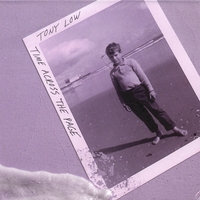
Tony Low -- Time Across The Page (2007)

Tony Low -- Time Across The Page (Lowtunes)

Tony Low was one of the creative forces behind The Cheepskates, a garage rock band on Midnight Records. The ‘skates (who also included the talented Shane Faubert) played a folkier version of garage rock. If you were involved in the ‘80s college radio scene back in the day, The Cheepskates music would have drawn comparisons to acts like The Last and The Outnumbered.

Low has continued to record, and this solo effort shows that he’s a true blue jangly folk popper. This album balances more upbeat numbers with some genuinely lovely softer material. Low has a gentle voice that is achingly sincere. Perhaps for some, it might be a bit much at times, but I think it creates a real sense of intimacy. Better yet, Low composes material that fits his instrument perfectly.

The softer songs are some of the best songs on this LP. The delicate “Spiral” is one of Low’s best creations, with maybe a hint of Beach Boys sweetness and an undercurrent of sadness. The song floats with a bit of ‘70's singer-songwriter vibe, and the moodiness is broken briefly by a nice instrumental break, before heading back to more languid sounds.

“Brave Michael” sounds like another ‘70s refugee. This is pure folk-pop, there’s not much more to say about it. Low and fellow guitarist Benjy Johnson harmonize well, on a tale about a man who had stardom and lost it, literally wrestling with demons (at least that’s my take on it). Low augments the simple melody with light keyboards and strings, making this lush and pretty.

Low can still rock out a bit, though this album is much more backyard barbeque, rather than garage, rock. “Not the Lucky Ones” has a little fuzz guitar and later on the wah-wah pedal gets some use. And “This Old House” has a bit of that garage momentum, but instead of loud guitars, there are nifty touches like Virginia Keast’s trumpet part. The lead cut, “Winter of Black Ice”, has some great lead guitar work, which both ornaments and drives the tune at different points. This track has one of the best hooks on the record.

What I like about this album is that although it’s not in the same gear, so to speak, as The Cheepskates stuff, I can see how Low got from there to here. And he still knows how to put together a memorable, affecting tune.

Saturday, August 16, 2008

Coldplay -- Viva La Viva Or Death And All His Friends (2008)

Coldplay -- Viva La Vida Or Death And All His Friends (Capitol)

Credibility is such a funny thing. Artists strive to get their music heard by as many people as possible. For some, that’s more than enough. For others, sales without acclaim falls short of what they want to accomplish.

After two ridiculously successful albums, and an utterly unnecessary live set, Coldplay has been casting about for critical props. Last album, the band made some minor musical modifications and nabbed a hook from an old Kraftwerk song. These things got some notice, but no one genuflected. Coldplay was a serviceable anthemic pop band -- Radiohead lite.

This time around, Coldplay decided to show the world that it was serious about being taken seriously. It was time to deploy the big guns. Brian Eno was signed on to co-produce the band’s latest effort.

And Eno does a fine job and the album certainly sounds good. But Coldplay has always sounded good. What has kept Coldplay from being more than enjoyable radio fodder is that there’s not much beyond the surface, though they excel at the superficial. They clearly want to show everyone that they have something to say. But they haven’t really found much of anything to say.

Which is a shame, because the band is certainly progressing. Chris Martin’s sweet voice may have its detractors, but he conveys a lot of emotion. On a few songs here, Martin shows that he doesn’t always have to sing near the top of his range. Guitarist John Buckland manages to retain his signature ringing sound, while playing both inventive leads and adding to the textures on the record.

One song where Eno’s job as sonic landscaper (it’s true -- he’s credited with “sonic landscapes” in the liners) is well done is “Lost”. This song relies on a great mix of percussion, layered keyboards and key contributions by Buckland. This song is Coldplay at its best, with the lyrics being fairly direct and not overreaching and an economical Buckland guitar solo that gives this moody number a bit more kick.

There is also some kick in “Yes”, a song that starts off with a Beatle-esque psych-pop vibe which is blended with some low key moody balladeering. Martin’s lower register is as inviting as his normal range, and the song builds well to the chorus, and after a second, more intense verse, Buckland uncorks a driving solo. Then the band goes quiet briefly, with a ringing riff takes this song into U2/Midnight Oil territory. By the end of the track, Buckland sounds like he’s giving props to The Edge, while Martin wails in the distance. This is the most thrilling track on the album.

Heartstrings are plucked on “42". Musically, this song sounds like it’s got two parts Elton John (circa “Sorry Seems to Be the Hardest Word”), one part John Lennon and one part XTC (circa “Your Dictionary”). Like “Yes”, the song goes from lush sounds to lacerating rock, with the jagged guitars evoking Radiohead (like that’s the first time it’s happened). But the “you thought you might be ghost/didn’t get to heaven/but you made it close” hook is, well, kinda dopey.

Meanwhile, the single, “Viva La Vida”, doesn’t have the greatest lyrics, as Martin’s words about a king who is now a commoner are adequate, but aren’t very compelling. However, the music is fantastic. This is wide screen pop with orch-pop overtones. As with other tracks on the album, the use of strings is very thoughtful. Here, they really define the track.

Basically, Coldplay plays big music, but doesn’t have big ideas to go with them. Let me clarify -- musically, Coldplay is becoming more inventive, which makes this album a fine listen. But the band just doesn’t have the lyrical flair to take this material all the way to the top. Instead of seeking out Brian Eno, maybe these guys need to find someone who could help them find the words that could make this music shine to maximum effect.

Stratocruiser -- Revolutions (Previously unpublished 2007 review)

Stratocruiser -- Revolutions (Just Plain Lucky)

This North Carolina band has shifted its emphasis from hard power pop to plain old fashioned hard rock. This doesn’t mean that melody is in short supply, but the songs are more rooted in blues and R & B structures than following in the Beatles/Raspberries/Cheap Trick mode. The band is limber and not plodding, giving this a nice ‘70s feel.

“Stuck to You” is an early winner, with its rhythm sounding Motown-ish and there’s some furious vamping, while Clay Howard’s husky vocals have the authority to carry across this intent number with a hooky chorus.

The band discovers the great lost Foghat song on “Rock and Roll City” which has an extremely catchy classic rock chorus -- as much as I like this track, I wish the guitars were even louder -- I can only imagine how this steamrolls when it’s performed in concert. “Saw Your Picture” is another bashing rocker that is rooted in ‘50s rock via the AOR sound of 30 years ago, with some nice Chuck Berry inspired lead guitar work.

I also like the moody mid-tempo “Shimmer & Fade”, which is designed to get the fans swaying. As a bonus, Stratocruiser tacks on a nice cover of Led Zeppelin’s “Misty Mountain Hop” (one of those ‘hidden’ tracks) with Howard doing a very nice faux-Plant. If these guys aren’t the new Foghat, they might be the next Ram Jam, and the world needs one of those.

Friday, August 15, 2008

Rock vs. Bedtime

There was a time, not too long ago, where I went to a ton of shows. At the beginning of the decade, I was probably catching at least four shows a month. It was mostly indie bands at small clubs, which is the way I like it. I was the envy of some of my friends, especially those of the married and with kids variety.

Nowadays, I just don't go see as much music. There are a few factors at work. First off, just because I went to and saw a lot of shows, it doesn't mean that I was seeing lots of great shows. While I rarely saw any duds, I went out a lot to see bands that were just a bit above average. Nothing against above average, but is that worth a late night out?

Second, as I get older, the number of people who are willing to go with me to a show has decreased markedly. I don't have to have a show buddy all of the time, as I will go see a band by myself, if I like the band enough. But normally, being a social creature, I'd like some company.

Third, over the years, I've gained more responsibilities. So late evenings on work nights are few and far between. It has to be a pretty special artist to get me out late on a Tuesday or Wednesday.

Just because I've curtailed my showgoing doesn't mean I've ossified into someone unhip. Right? After all, I just made it through my second full Pitchfork Music Festival. And I saw them consecutively. Pretty amazing, huh?

But as of tonight, I realize that I'm getting increasingly lame. Tomorrow night, Oneida is playing in Chicago at The Empty Bottle. I'm a big fan of Oneida's mix of kraut rock, psychedelia and whatever else pops into the musical mix. Sounds like an easy call on a Saturday night.

However, looking at the listing on the Bottle's website discourages me. The show starts at 10. And there are three support acts: Jah Division Electric Sound System, Arriver and Dirty Faces. Even assuming that each of those artists plays 30 minutes apiece, it's doubtful that Oneida would start before midnight. Which guarantees a show until almost 2 a.m., and getting home after 2:30.

I don't know which bums me out more -- sitting through three opening acts, with the high likelihood of either hating or being bored to death by at least two, if not all three, of them; or staying up so late, getting home so late, and either getting little sleep and feeling like crap on Sunday, or sleeping in and wasting the day.

Maybe the cliche "If it's too loud, you're too old" should be modified to "If it's too late, you're too old." As much as I like the metronomic drone of Oneida to kick me in the ass, I'd much rather be asleep by midnight, give or take half an hour. I think this says more about me than how much I really like Oneida.

This realization isn't devastating. I have hundreds upon hundreds of shows under my belt. I've done my time, so to speak.

But I still love great live music. I just need to make a better effort to see artists who conform to my increasingly limited schedule.

Thursday, August 14, 2008

The Capstan Shafts -- Fixation Protocols (2008)

The Capstan Shafts -- Fixation Protocols (Rainbow Quartz)

The obvious first reaction upon hearing this record is to think that the Shafts could be called Guided By Guided By Voices. It’s the short songs, some that are fragmentary, and the oddball lyrics.

But the sound of this Vermont act is much more in keeping with loads of psych-pop eccentrics from the U.K. Think Beatnik Filmstars, The Orgone Box, The Orange Alabaster Mushroom and The Cleaners From Venus. Dean Wells has a bunch of ideas and runs through 22 songs in just over half and hour.

The tricky part about this approach is that no matter how appealing the sound -- and this definitely sounds appealing -- it’s hard for anything to stick. To a degree, this album doesn’t fully overcome this problem. But repeat plays allow some songs to really stand out and give the ears something definitive to latch onto.

The first song that stood out for me was “Eyeliner Skywriting etc.”, an endearing love song. As you can imagine, when the songs are so short, Wells wastes no time getting to the hook. The mix of the strumming guitar and the electric piano and the upbeat melody is a winner, as Wells waxes winningly about the “eyeliner skywriting poem that nobody gets.”

The longest song on the album, at a whole 121 seconds is one of the most rocking. “Her Novel ‘Canal Street Poetry’” is full of distorted guitars and the rhythm (it sounds like he’s drumming folks) is quite solid. The lyrics are hard to fully make out in the din, but snatches of words like “bestiality” certainly can bring any listener to attention.

On “The Stunted Kind”, Wells plays some swell low-fi folk pop, strumming a bouncy ditty with a great bass line and lead guitar touches. “Anthropecene Stealers” actually has a real Guided By Voices feel to it. And Wells finds a great riff to ride “Little World Saver” for a quick spin.

Wells has been doing this low-fi thing for quite a while, and suppose he won’t change his approach. But I wish that the songs sometimes had a bit more heft -- his one man band playing is fine, but most songs hint at rocking rather than reaching full force. And while I don’t want him to get rid of the quick hitters, I think he could build up some of these catchy numbers into something more. Then again, for his fans, this quick hitting approach is likely the whole appeal.