Sunday, August 10, 2008

Ron Sexsmith -- Exit Strategy For The Soul (2008)

Ron Sexsmith -- Exit Strategy For The Soul (Yep Roc)

I once got to meet Ron Sexsmith before a gig. He was hyper-polite and an all around nice guy. If he had been any different, I would have been shocked. He just reeks of empathy and humanity. I get the impression that when he breaks up with a girl, she apologizes for putting him through so much.

This makes his records and live performances so instantly comforting. But there’s more to him, of course. For one thing, he manages to be so nice and empathetic without being sickly sweet. And he is one of the most economical lyricists around, making interesting observations in a direct manner. These words are sung by a friendly tenor and set to low key melodic music.

About the music -- it’s kind of formulaic. The last time I saw Sexsmith live, I realized that very few artists are as locked into verse-chorus-verse-chorus-middle eight than he is. He has a distinctive way with a melody. There’s not a whole lot of surprise anymore on a Ron Sexsmith album.

Yet his words and performing style are so appealing, that his records are pretty much guaranteed to be good. Perhaps the overwhelming consistency of his material may prevent the type of development that would lead to great albums in the future (and for the record, I think his one flat out great record is his sophomore effort, Other Songs). But every album is worthwhile.

The big wrinkle on this album is the horn backing on some of the songs. And not just any type of horns. Cuban horns. They provide color for one of the albums true highlights, “Brandy Alexander”. If you have the last Feist album, you already know this tune, as Leslie Feist co-wrote it with fellow Canadian Sexsmith.

The song is a simple metaphor -- a woman who is bad for him is like an addiction to the mixed drink. The song has a classic Sexsmith melody, and the piano that drives the song is augmented by horns and backing vocals from A Girl Called Eddy. It’s a real jaunty tune.

It’s followed by another song that is quintessentially Sexsmith, “Traveling Alone”. The simple combination of guitar and keyboard notes that opens the song leads into a creamy melody over light drumming. The premise of the song is as simple as can be -- no matter where we are or who we’re with, we are still in our own individual worlds: “though lives intermingle/our thoughts are left to roam/traveling alone.” This gets my vote for best use of the word “intermingle” in a pop song in 2008.

How does one cope with a world full of lonely people? Taking a cue from Todd Rundgren and Utopia, Sexsmith finds that love is the answer. This is the subject of “Ghost of a Chance”. It’s not just loneliness -- Sexsmith surveys all of the terrible things going on in the world, and surmises that without love “I just wouldn’t stand a ghost of a chance.”

I read a quote attributed to George Orwell that said something to the effect that this world would be a better place is everyone just treated each other nicely. Sexsmith seems to operate under this philosophy, as shown by “Impossible World”. On this song, producer Martin Terefe puts Sexsmith’s voice a bit more up front, only letting the other instruments get more prominent later in the song. Meanwhile, Sexsmith sings about how awful things seem, yet he still has faith that things will get better, and that faith might be due to faith in a higher power.

Terefe also worked with Sexsmith on his Cobblestone Runway album. As on that album, Terefe tries different sonic textures and instrumental approaches, so that this isn’t just a guy with his acoustic guitar. This time around, the album has a certain gloss to it. This isn’t a bad thing, as it gives the songs some layers that are easily peeled away to reveal the heart of these songs. Songs with a lot of heart.

Saturday, August 9, 2008

Midnight Juggernauts -- Dystopia (2008)

Midnight Juggernauts -- Dystopia (Astralwerks/Siberia)

If you could just throw in some cheesy crap sounding synth-drums, this album could be passed off as a lost album from the 1984 or so. This is lush, romantic pop in the vein of David Bowie, Roxy Music, Talk Talk and legions of bands that wore a little mascara from time to time. The mix of lush keyboard lines, lightly funky bass lines and soothing vocals still works after all of these years.

Let me talk about the vocals. Singer Vin Vendetta (whose also the keyboard wizard) has a Bowie-esque baritone that is perfect for this material. Sometimes it sounds a bit more like Andrew Eldritch of Sisters Of Mercy, like on “Twenty Thousand Leagues”. Part of that is because he sings in his lower register, with a throbbing bass line and little bits of keyboard sparkle dusting the edges. It all builds up to a soulful chorus. This is yet another band who understands the tugging sadness that electronic instruments can produce.

The band floats into psychedelic territory on the title track. This atmospheric tune, with more guitars, could easily be done by a band like Rockfour (or your psychedelic revivalist of choice). This is an avenue that should be explored more. “Tombstone” goes in a different direction, pushing the electronics to the hilt, with Vendetta singing through a vocoder, which sounds somewhere between Zapp and Neil Young in his Trans phase. The song has a great dance rhythm, but overstays its welcome a bit.

These tracks make the album interesting. What makes it good are the single worthy selections that start off the album. Vendetta’s keyboard lines are irresistible on “Ending of an Era”, as he mixes synthesizer surges with an insistent organ part while Daniel Stricken lays down a solid drum beat. The song builds the tension as Vendetta mumbles the lyrics, releasing in the chorus. Basically, this is an array of attractive sounds, really well arranged for maximum effect.

“Shadows” is as good or better. It follows a similar game plan sonically, but relies much more on ethereal synth sounds and a mid-tempo dance beat. The low key vocals remind me of latter day Duncan Browne (breathy and sensual), and the song verges on classic disco, and is simply suffused in cool. It’s one of those tracks that makes you move, even though the musicians don’t seem to sweat that much.

Like a lot of the ‘80s acts they remind me of, this album has its share of filler. But it’s more than outweighed by the strong pop sense and the overall appealing sound.

Thursday, August 7, 2008

Beck -- Modern Guilt (2008)

Beck -- Modern Guilt (DGC)

Generally, lyrics are not the first thing that grabs me when I listen to a song. Beyond a memorable phrase or line in the chorus, it’s the music that gets me first. Then the words follow. And depending upon the nature of the music, the lyrics either enhance the tunes or at least don’t interfere with them. In some instances, however, bad lyrics, or lyrics that don’t mesh with the music can ruin a song.

Beck is definitely a music first artist for me. His elaborate sonic constructions and haunting melodic sense usually work right away. As for his words, he’s one of the rare artists for whom I find a message or meaning to usually be more of a distraction than an enhancement. When he’s at his nuttiest, on albums like Midnight Vultures, he puts together oddball rhymes that are tailor made for his melange of rap, funk, rock and folk and whatever else he can think of.

When he goes for something more meaningful, it often doesn’t work for me. There are two reason for this: 1) when he’s tried to say something with his music, he often reveals himself to be a bit mundane in the ol’ observation department, and, 2) the tunes themselves sometimes suffer, since he wants the words to ground the tunes.

On Modern Guilt, Beck is trying to make some statements, but still keep the music more interesting. He teams up with Danger Mouse, who is extremely sympathetic to Beck’s musical notions. Arguably, he’s too sympathetic -- it could be said that the Mouse and Beck go together like peanut butter and peanut butter. They certainly have a lot in common.

This isn’t a bad thing, by any means, but it just means that the combination isn’t as mindblowing as one might think it would be. At times, I find myself identifying contributions that are clearly Danger Mouse’s, and there are a few. More often then not, their similar sensibilities are such that Danger Mouse’s sonic fingerprints are not obvious. You’d have to dust the master tapes for latent prints.

Meanwhile, Beck’s stabs at relevance prove to be a bit more effective than on albums like Sea Change. Instead of talking about the travails of the broken hearted, Beck is focusing on societal issues such as the environment. He’s no Joe Strummer, but the messages and the music seem to go together pretty well. Perhaps its because the messages lack specificity and get subsumed in the mood of the tunes. Or he’s content to allow indulge in some wordplay to keep things from getting too heavy.

So when he sings about the “icecaps melting down” in “Gamma Ray” over a rhythm track with some frugworthy ‘60-styled guitar, it goes down really easy. The with-it tuneage melds well with the wispy melody and Beck’s typically matter-of-fact vocals. Likewise, the lines “You got warheads stacked in the kitchen/you treat distraction like it’s a religion” are somewhat thought provoking, but also just sound good with the repetitive ‘60s faux jazz backing. Whatever commentary he is undertaking isn’t exactly coherent, but the lyrics flow like his more clever and jokey stuff.

The most Gnarls-like track? That’s debatable (and, I suppose, the same could be said for the most Gorrillaz-y tune). One nominee would be the title track. This is one of the purest pop songs, with a strong insistent keyboard line carrying the song. It’s a bit like Leon Russell’s “Tightrope”. Just a bit.

My favorite songs are the two prettiest songs on the record. The album closer “Volcano”, is built on a basic blues chord structure and it unfolds into a rising melody that is augmented by disembodied choral singing. It’s a haunting, contemplative number. Meanwhile, “Chemtrails” is soaring ethereal psychedelic tinged pop. Jason Falkner contributes bass and guitar and perhaps tips on what Air does (Jason’s played bass for them on tour), as this song hits a vibe that is similar to some of the best of that French duo. The song is fatalistic and comforting at the same time.

For some reason, although this album sounds good and there are certainly some great moments on it, it feels like it’s missing something. It’s rather short -- 10 tracks in just under 34 minutes -- which isn’t always a problem (aren’t most albums too long?). But in this case, maybe one or two more tunes may have helped. On the other hand, from the time I started thinking about this review until the time I’m finishing up here, I like the album more and more. Not essential, I guess, but worth having.

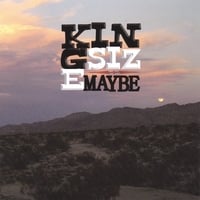
Kingsizemaybe -- Kingsizemaybe (2008)

Kingsizemaybe -- Kingsizemaybe (Brewery)

Is this country rock, country that rocks, or rock that is soaked through with twang? This can’t really be alt-country or insurgent country, as it doesn’t have that academic gloss or extreme retro vibe that would make the label stick. I do know that there is some shit kickin’ going on, and even a bit of ass kickin’.

Now that I’ve gotten that out of the way, explaining everything while clarifying nothing, let me tell you more about Kingsizemaybe. The frontman is Gary Eaton, who has a nice lived in sort of voice. His wife Shelli plays bass, and she can sing too. As an added twist, you get Robbie Rist in a cowboy hat. Not only does Rist twiddle some production knobs with Mr. Eaton, but he plays guitar and sings some backing vox.

There seems to be one criteria for a Kingsizemaybe song -- it has to be fun. Even if the song is a lament, a song that might head towards Cry-in-your-beer Avenue, there’s a spark and energy here that keeps it from being depressing.

Songs like “Keep Your Eyes on the Road” are simply irresistible. Adam Maples lays down a speedy shuffle beat, while Robert Lloyd provides great color with an organ and a mandolin. The tune has a great lead guitar breakdown. This is just a breathless twangy rocker.

“Big Maybe”, which I suppose is the band’s theme song, is played at a much more relaxed tempo. This song has a loping feel like some of The Band’s jauntier outings. The basic message of this song is that you should stick with the ones you like and love, because who the hell knows what else is going to happen. That’s pretty good advice. And there’s other sorts of wisdom throughout the song: “Well I got your number on the palm of my hand/you can call me first I won’t feel like less of a man.”

These guys have good taste too. There are two covers here. One is a Hoyt Axton composition, “Sweet Misery”, which was once waxed by John Denver. I haven’t heard Mr. Rocky Mountain High’s version, but I can’t imagine it has the bluesy backporch treatment that Kingsizemaybe gives it. It’s good. The album leads off with “The Treasure of Love”, a George Jones tune. The song puts a bit of guitar charge into good old fashioned honky tonk. Buck Owens would have approved.

The band even nails a bit of a Southern rock feel on “Dallas”. Maybe 60 percent Southern rock and 20 percent Eagles and 20 percent Marah. The lyrics are heavy on specific details, but there are a lot of blanks to fill in. It’s an epic and a mystery. The swelling organ and the background vocals behind the passionate lead vocal are extremely compelling.

Too often roots rock is a designation that implies one defined sound, and only one. But Kingsizemaybe shows that you can find all sorts of roots all over the place, and they have the confidence and talent to pull off a relatively wide ranging slab of Americana.

Saturday, August 2, 2008

Wire -- Object 47 (2008)

Wire -- Object 47 (Pink Flag)

Bruce Gilbert is no longer around, so Wire performs as a three piece on this effort. Didn’t they call themselves Wir the last time this happened?

Anyway, this album comes on the heels of last year’s solid Read and Burn 03 EP. On that EP, the band maintained its fascination with clipped melodic artiness, as some extended songs created a moody atmosphere.

However, on this album, it’s back to tighter song forms. Moreover, the dangerous bursts of industrial guitar found on Send, the last Wire album, are no longer present. To some extent, this is as close to a simple “pop” album as Wire has ever made. The band’s melodies have always been a part of its appeal, and here, they are the main attraction.

Perhaps this could be the start of a new genre -- sneer pop. After all, the opening track, “One Of Us”, has this inspirational lyric as a refrain: “One of us will live to rue the day we met each other.” Yes, Colin Newman was born a curmudgeon and he intends to stay that way. The song itself is sort of bouncy, with Robert Grey playing a rather jaunty beat. Anyone familiar with the melodic style of Wire will find this track instantly identifiable.

Newman drops the declamatory voice on the most appealing track, “Perspex Icon”. This is driven by stinging guitar from Newman and a great pulsing bass line from Graham Lewis. The guitars are doubled up, with fuzzy chords and a melodic lead gliding along with Newman’s singing. This song is practically 154-worthy.

Although not as hooky, “Mekon Headman” has almost as strong a melody, albeit one that sounds like it was borrowed from some older Wire tune. The song has a basic stentorian verse, singable chorus motif. On this song, the lyrics are spare and clipped, in keeping with the basic music.

One other striking track is the languid “Patient Flees”. This song is built on a lovely three note lead guitar figure. Here, the verse is melodic, and the refrain is gruff with Newman snidely intoning the rhymes: “Resurrection, insurrection, defection, disaffection/infection, imperfection, disinfection, rejection.” The more open construction of the song makes it a novel number in the band’s catalog. That being said, the guitar solo is no more than a repetitive pattern. So very Wire.

Although the album is rarely less than pleasant, it never catches fire. This even holds true on the one ‘in your face’ track, the album’s finale, “All Fours”. With Helmet’s Page Hamilton credited with providing a feedback storm, the guitar squalls seem to be deliberately muted by Newman, who produced, engineered and mixed the album. Sometimes the sense that the contents of a song are going to be explode can be very powerful. On this track, however, there is an explosion but it doesn’t fully come across.

This typifies what keeps this album from being really special. There’s just not much of a sense that Wire is really reaching for anything, instead merely content to make nice Wire songs. And who wants Wire songs to just be nice?

The Telepathic Butterflies -- Breakfast In Suburbia (2008)

The Telepathic Butterflies -- Breakfast In Suburbia (Rainbow Quartz)

On its third album, the Canadian psych-pop band led by Rejean Ricard sounds as good as ever. Musically, this album is pretty comparable to the last two, with perhaps just a bit more of a punchy mod aspect to a song or two.

Where the band has tried to grow is in the content department. Breakfast In Suburbia is a concept album. Ricard looks at the ‘burbs with a jaundiced eye. It makes for some pretty interesting songs. At times, he may have sacrificed some hooks to focus on the words. I think it’s a worthwhile tradeoff, because the music is consistently engaging and Ricard’s vigor for his commentary is obvious.

For example, “Gossip Trail” is a pithy look at how information travels around a neighborhood, people exchanging rumors for no other reason than it’s something to pass the time with. The song is a pleasant jangle popper that ends with this observation: “Now that we’re getting old and chronically sick and cold/it’s hard to face change/but I’m still quite aware of things going on right here/it’s hard to explain.”

Ricard is even more cutting on “A Scathing Report”. Musically, this song covers some of the same moony territory as former labelmates Rockfour. This is as hectoring as the most moralistic T Bone Burnett song, with Ricard indicting Americans for proclaiming such lofty goals and aspirations, but not realizing the facts that undermine these claims. This isn’t your typical psych-pop, with hippy dippy paisley dripping lyrics.

Ricard moves into Beatles and Hollies territory on the questioning “A Midlife Crisis”. This song is a laundry list of things that the protagonist should have done. The music is mid-tempo and melancholy as Ricard ruminates in the verses, and the tempo and melody pick up in the refrain, as he realizes how he can make up for it by doing something now. I love how the musical shifts compliment the lyrics.

“She Looks Good” is somewhere between The Kinks, Paul McCartney and a Mike Nesmith Monkees tune. This song might have the strongest hook on the record. This is a song about facades versus self-awareness, and Ricard makes his preference well known: “It’s the fact you are yourself that makes you great.”

And the Butterflies are themselves. What comparisons I make throughout this review are, for the most part, pretty general. Some ‘60s revivalists are much more explicit about their thefts. But this trio has melded its inspirations into a distinctive sound that evokes with sounding too derivative of any one artist.

This album, although instantly attractive on the surface, takes a bit longer to sink in. As I said near the beginning, the focus on the lyrics might come at the expense of a few hooks. And although I like the words, Ricard’s observations are sometimes more heartfelt than original. Still, I find myself going back to this album enough that there is definitely something to it.

Friday, August 1, 2008

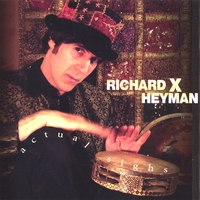
Richard X. Heyman -- Actual Sighs (Previously Unpublished 2007 review)

Richard X. Heyman -- Actual Sighs (Turn-Up)

If you believe Parke Puterbaugh’s liner notes, this new Heyman disc isn’t just the best thing since sliced bread, it’s miles better. And while I still thank the Parke-ster for his praiseful review of Sparks’ Angst In My Pants, which led me down the road of Mael worship, methinks that his hype goeth too far.

Yes, it’s cool that the Richard X-man went back to songs he wrote back in the days when he was merely a fledgling power pop cult figure. And sure, getting around to finally record them is a good idea, because there still aren’t enough Heyman tracks in the world. But after reading these liners, you’d think that Richard should be nominated for a Pulitzer or a Nobel or something.

Okay, enough about the liners. Here we have the fully grown up Richard, doing songs he wrote when he wanted to grow up to be the man that he is now today. What can we learn from this?

First, that from the get go, Heyman wrote great songs. Second, that he, much like contemporary Tommy Keene, has honed his style to perfection. So there are no revelations here. Only fun catchy songs, some of which cut more deeply than fodder for AM radio (were it still the driving force in music). This is melodic rock with lots of drive.

At times, Heyman plays with the fervor of Bruce Springsteen in the ‘70s. “RXH’s in the First Person Blues” may be based on a jangly blues chord progression, but the song is a real head rush, with Richard cheerfully admitting, “I’m a liar.” If you hadn’t read the liners, you might believe that Heyman recorded this when he was 18, as he is so spirited. Remember, Richard pretty much plays everything on his records, and this track is about as rocking as a one-man army can get.

Heyman’s drums and another great guitar line fire up “Stockpile”, which is not a song about his attic full of unrecorded songs. But it’s not too far away. It’s about staying home with books, movies, and music, while the world goes to shit. This comes from the same geeky side of Richard that spawned the fab “Civil War Buff” (from Hey Man!), but it’s laced with either paranoia or misanthropy -- you can take your pick. Despite the bitter lyrics, this is buoyant music that sounds like the Beau Brummels gone power pop. This is another song that makes me think of Springsteen, in the energy and attitude.

There is one song that is truly bluesy. “Twelve Bars And I Still Have the Blues” is barroom rock at its best. Heyman gets a groove going and holds onto it. He even sings a line and then repeats it, like all the best bluesmen do. There may be another straight blues rocker in Heyman’s catalog, but I can’t think of it right now. It’s a great change of pace, particularly when Richard takes off on an acrobatic guitar solo run.

Some of my favorite RXH songs are the slow numbers. On those songs, Heyman’s wistful, romantic side takes over, and washes me over in sweetness and sadness. There are a few of those on here, none better on “Winter Blue”. Heyman’s arranging skills are on full display here. The basic elements of the track are there from the beginning - the constant guitar part, the light percussion, but he subtly adds other things throughout the track. And the instrumental break, with its lovely synthesized strings and flute is so durned pretty it makes me all emotional and stuff.

As a bonus, Heyman redoes the songs from his debut EP. The re-recordings of the Actual Size material just make this bundle all the more wonderful. “I’m That Kind Of Man” is pretty much quintessential Richard, something that could have ended up on any of his albums. Then there’s another one of those achingly sweet ballads, “Hoosier”, which has a great opening line: “The girl I used to know/yes, you’d like to know her too.” It also has a buttery harmony filled chorus. Never has the word “hoosier” sounded so nice.

I wish this came with the lyrics. Heyman is one of the more interesting lyricists in power pop, because he not only is a word playa, if you know what I mean, but as songs like the aforementioned “Stockpile” show, he’s willing to think outside the genre box when it comes to subject matter. Just take it from me, there are a lot of cool words here to go with the cool music.

The only thing to do now is enjoy this and wonder what’s next? The undiscovered box set that Heyman absentmindedly left in a cupboard in his folks’ Winnebago in Port St. Lucie, Florida? A concept album about the Battle of Bull Run? Stay tuned, I’m sure it will be good.