Monday, August 10, 2009

Micachu -- Jewellery


Micachu -- Jewellery (Rough Trade)

For a youngster, Mica Levi has mastered both simplicity and complexity. Her debut album, featuring back up on some tracks from her band, The Shapes, is a terrific collection of post-punk pop. Her androgynous boyish vocals navigate through oddball rhythms, her own guitar scratchings and some surprisingly compelling melodies.

What I like most about this album is that I don’t think Mica ever slavishly rips off any particularly artist. It’s almost like she transfused Simon Reynolds’ Rip It Up And Start Again into her bloodstream and found a way to reconfigure a slew of old but not overused ideas.

Her quirky guitar playing and strong sense of rhythm drive most of her compositions. That sense of rhythm can be naughty or nice.

It’s quite nice on the single “Golden Phone”, which thrums along on a skipping beat with melodic harmony vocals and Casio beeps easing the groove along. This is a quirky summer song with a few wrinkles.

But the rhythms get a bit trickier on “Lips”, a full band effort which sounds like a twinkier version of The Fall’s psychobilly workouts. Mica plays some skittering guitar leads, while the Shapes pound out an infectious quirkbeat.

On “Just on Case”, the song is structured around a cacophony of strumming guitars, the ebb and flow of the rhythm giving the song a sense of rushing from out of nowhere. Mica uses dynamics effectively, with the music quieting down in spots for her to toss off some phrases like “I won’t have sex/’cos of STDs” that really grab the ear. There’s even a bit of a funk work out that crops up, sounding like a cuddlier Minutemen caught in a loop.

This is followed by perhaps the catchiest number on the album, “Calculator”. A Mica strum opens up into a playful tune. The simple melody is again enhanced by dynamics -- the band stops, the band kicks in, stops, kicks in and so forth. There’s a nifty middle eight where Mica’s guitar almost sounds like a ukelele.

Mica keeps the album moving, and the songs don’t overstay their welcome. In the tradition of Wire, every song has about all it needs and when the basic ideas have been exploited to maximum effect, the song ends.

This is simply a dazzling debut from an exciting new talent. I can hear bits of early XTC, The Cure, Scritti Politti, The Fall and others, but never to the point where the reference points overwhelm the tunes. This is because Mica, with her voice and guitar playing, keeps her personality front and center.

Thursday, August 6, 2009

Peter Holsapple & Chris Stamey -- Here And Now


Peter Holsapple & Chris Stamey -- Here And Now (Bar None)

It was a few years ago that The dB’s reunited and played a smattering of shows, promising an album in the future. That promise has yet to be realized, but the appearance of this album from the band’s two songwriters, is a pretty nice stop gap.

The first Holsapple & Stamey album, 1990's Mavericks, is a minor pop classic, and this album can’t quite approach that standard. But with two pop masters like these guys, there are some real gems.

One of those gems is a cover. The duo takes on Family’s “My Friend the Sun” on the first track, and it sets the tone for the album. Holsapple’s reedy voice radiates optimism on an album that is distinguished by its general good cheer. The whole point of the song is that even though the sun is “well on the run/he’s there in the distance/if you care to see,” i.e., things will get better, just keep your head up.

The songs whipped up by Stamey and Holsapple generally follow this theme, celebrating the big and little things in life. For example, Holsapple sings an ode to the dynamics of a loving relationship on “Early in the Morning”. Over a gentle mid-tempo jangle, Holsapple expresses his devotion by promising to make coffee for his love, letting her sleep in. After all, he can’t sleep well, so why not? I’m not sure if Branford Marsalis’ saxophone accompaniment adds much, but this is a sweet (and perhaps, for some, too cute) love song.

Stamey goes even further with “Broken Record”, a song of incredible beauty. This song is a slow burner with Stamey providing jazz guitar undertones in spots. Stamey, in his signature warble, sings, “Let me be your broken record/let me be your favorite song/let me be your broken record/the one we play all night long.” This song is achingly romantic, with Stamey cataloging the different songs or artists who might provide that special song. It’s a simple metaphor, executed to perfection.

Devotion is one of the primary topics on this record, as further illustrated by “Broken Record”’s companion, “Santa Monica”. Here, Stamey expresses his desire to “hang around with you/until my life is through.” The music here has a real weight to it, as both Stamey and Holsapple are clearly emotionally connected to the sentiments expressed therein.

Holsapple’s take on true love is bouncier and more clever, though no less heartfelt. On “Some Other Part”, a strummy acoustic number with just a hint of twang, Holsapple tries to create a love equation: “Half of me/is also carbon based/then there is that other half/since I’m so good at math/that means you owed me/some other parts.” This song comes from the same place as dB’s classics like “Love Is For Lovers” with just a little bit more of a laid back vibe.

In addition to the unity of mood and theme, these songs are better suited for the duo format than The dB’s. To put it another way, this doesn’t rock or power pop too much. And I don’t have a problem with that.

This album is not quite as strong as Mavericks, as it simply isn’t quite as good song for song. There’s one clunker, Holsapple’s “Widescreen World”, a lightweight mix of power pop and The Rascals that is just a bit too trifling, and a few other songs that aren’t too memorable.

But the album ends really strong. “To Be Loved” is a lovely ballad, with Stamey and Holsapple harmonizing over spare backing, including a pedal steel guitar that provides just the right amount of color. Stamey takes the lead in the verses and the simple lyrics give this the sound of a standard from decades ago.

Meanwhile, Stamey’s “Tape Op Blues” is a chuckle-worthy account of a recording session. Stamey tells the familiar story of an up-and-coming band who blow their advance and confidence while getting their first album done: “The first few weeks went swimmingly/we fired the drummer/and drank coffee/the basic tracks went like a knife through butter.”

It’s a light note on which to end an album that radiates so many good vibrations.

Tuesday, July 28, 2009

Doves -- Kingdom Of Rust


Doves -- Kingdom Of Rust (Astralwerks/Heavenly)

It’s starting to sound like Doves are making a box set of wonderful pop albums, one disc at a time. The band mixes melancholy tunes that have the grandeur of romantic predecessors like The Blue Nile with lessons the members learned in getting people out on the dance floor. The result isn’t dance music, but classic pop with a modern edge and some groove. This is well illustrated on “Compulsion”, which melds a prominent slowed down disco bass line with prettily strummed guitars and a haunting shoegazer chorus to make something both familiar and unique. At times the band verges on anthemic, as on “The Greatest Denier”. However, the big music here never goes over the top, only threatening to do so, adding to the excitement. The two best songs are the title cut, which has an uncharacteristic loping Western shuffle rhythm over the usual beautiful melody, and “Spellbound”, a breathtaking mid-tempo ballad with lovely lead guitar work over a cascade of acoustic guitars, with a typically soulful and engaged lead vocal. This is probably just a shade below the band’s last effort, Some Cities, but that’s just the difference between classic and merely great.

Saturday, July 25, 2009

The Resonars -- That Evil Drone


The Resonars -- That Evil Drone (Burger)

Matt Rendon has a voice that sounds a fair amount like Allan Clarke of The Hollies. He also is a capable one man (in the studio) band, layering on harmony vocals that sound swell. So The Hollies loom large when listening to The Resonars.

But Rendon does not write pure British Invasion style pop songs. There are no “Bus Stop”’s here. Rendon’s songs cover somewhat different ‘60s turf. He is a master composer of psych-pop and rock. His songs are consistently melodic, but they also really rock.

Without going back to past Resonars releases (primarily due to the stack of other things I need to review), the latest plate seems just a bit tougher and forceful. I don’t mean that this is raving Blue Cheer acid metal. It’s just a bit more pointed. Of course, it could mean it's been a wild that I've listened to The Resonars, other than when a track comes up on shuffle on my iPod.

Beyond that distinction, this album is blessed with hooks galore. What I find interesting is that Rendon isn’t so much about the indelible chorus as he is about striking instrumental passages. The catchiest aspects of these songs are usually little guitar figures or riffs that lock a song into the brain for good.

The best example of this is the amazing “Here’s the Frenzy”. Rendon seemingly deconstructed a few different songs to come up with this five layer cake of retro psych bliss. Where to begin? How about the beginning?

The song fades in with jangly lead guitar, before slamming into power chords, leading to rock that sounds like a freakbeat train in danger of running off the rails. Rendon adds some twanging Dick Dale/Link Wray guitarage underneath, creating a mix of rumble and lovely Townshend-like licks. Throw in some crisp drumming with crashing cymbals and this is a song that keeps soaring and riffing, with the pretty parts providing a welcome release.

If you want something in more of a Merseybeat vein, head back to Track 2, the breezy “No Black Clouds Float By”. This might have the strongest chorus on the record, as this is pure pop pleasure, augmented by some stinging lead guitar lines.

This is followed by the dramatic, sweeping “One Part Moan”. Here, the lead guitar gets things going right away, but the verses are carried by the urgency of Rendon’s work on the bass guitar, all to set up more lead guitar wonder. Throw in the terrific vocals and a grabbing melody and this song is pure excitement.

Indeed, The Resonars specialize in these keyed up numbers, with “World Apart” and “Black Breath” providing similar thrills. But Rendon adds a vaguely countryish number in “Sister Sally” (sounding like The Hollies meet A Quick One era Who), a pretty acoustic ballad (“Yes Grosvenor”) and really nifty mid-tempo instrumental (“Run Kodiak Run”).

Yep, this is another winner from The Resonars. The band may take its cues from the past, but the music sounds as fresh as can be.

Wednesday, July 22, 2009

Maximo Park -- Quicken The Heart


Maximo Park -- Quicken The Heart (Warp)

At first, the title of the third Maximo Park album seemed like a cruel joke. This album sounded like a band going through the motions, regurgitating the same old pop songs with slightly slicker production, courtesy of veteran knob twiddler Nick Launay.

And you know what? Despite the fact that my reaction to this album has gone from meh to yay, I’ll admit that Maximo Park hasn’t made major changes since its debut album managed to stand out amongst a crowd of British post-punk inspired acts.

So why does this work? Because Maximo Park is really good at what it does. The band has a sharp sound, with texture and tone. And Paul Smith makes his tales of romance sound of the utmost importance, while he alternatively buys into the melodrama and deflates it, depending on his mood. Moreover, in going back to the band’s debut, I realized just how much tighter and more powerful the band sounds now -- and they sounded pretty sharp back then.

Rubbery bass lines, biting guitars, rock solid drumming and keyboards augmenting melodies are all in place. The killer hooks of songs like “Apply Some Pressure” aren’t in abundant supply, but the hooks do reveal themselves over repeated plays.

The twitchy music fits the fitful mood swinging of Smith. He doesn’t just play the loser in the game of love, as evidenced by songs like “Questing, Not Coasting”, where he shags a gal while they watch a thunderstorm outside a window. But he’s a thinker, hence, when he tries to get sexy, he gets all analytical.

This is reflected in “Let’s Get Clincal”, a cool mid-tempo track with snappy drums and percolating bass and keyboards. Smith puts his cards on the table, crooning “I’d like to map your body out/inch by inch/North to South/and I’m free for circumnavigation.” The band contrasts the jocular verses with some chilly synths and rapid fire drumming in spots, to add the necessary pulp novel atmosphere.

That sense of drama is anticipated by the title of “A Cloud of Mystery”. Here, Duncan Lloyd’s guitar keys the proceedings, with a hint of a ska rhythm in the verses as Smith sings of a girl who is “dressed up/it’s her duty to the town.” Here, Smith is going after the haughty gal that everyone wants, getting a fleeting chance before she took off: “I threw myself into your world/only to come up short.” The song builds to crashing choruses that sound like a mid-point between The Cars and Gene. At least it sounds that way to me.

The callow yet knowing youth that has been at the center of Maximo Park’s songs is growing up, as shown on “I Haven’t Seen Her in Ages (An Opening)”. This uncharacteristically wistful song finds Smith reminiscing about a love that never found its footing and how it still haunts him. As we so often do when dumped, Smith focuses on the best moments of the relationship, while acknowledging that “she ripped me to shreds” and that she is “my ailment.” Again, the music is pleasant mid-tempo pop, with just a hint of post-punk sharpness.

Perhaps the main reason this album didn’t grab me at first is because the band is just a little bit less frenzied, a bit less herky-jerk, even though the general approach is the same. There are still some true rockers in the mix, but the slightly more mature point of view seems to require more reflective settings.

Whatever the case, Maximo Park has won me over again, primarily on the strength of Smith’s personality and lyrics. Because the front man truly drives the band, I’m curious if the band’s music can go much further. I’ll find out in a year or two.

Wednesday, July 15, 2009

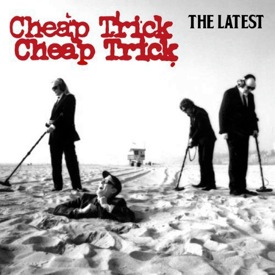
Cheap Trick -- The Latest


Cheap Trick -- The Latest (Cheap Trick Unlimited)

I suppose any band that’s made it through three decades is going to engender the inevitable “This is the best album since _____________” hype. That’s certainly happened with the new Cheap Trick album, the third Trick effort since the 1997 eponymous effort that proved to the world the band’s continued vitality.

Sadly, this album does not live up to the hype. But The Latest, like its predecessor, Rockford, shows that Cheap Trick is still more than capable. The musical excellence of Cheap Trick can’t be disputed. Rick Nielsen, Tom Petersson and Bun E. Carlos are all superior instrumentalists. As good as those three are, the best of the bunch might be Robin Zander, who is simply one of the greatest vocalists of the rock era. It’s not just Zander’s range and power, it’s the fact that he is a true interpreter who tailors his vocals to what a song needs.

This album is a particularly good showcase for Zander, as it is dominated by mid-tempo ballads of varying degrees of quality. However, this surfeit of mid-tempo songs makes the album somewhat monochromatic.

There are only a smattering of rock numbers here, and even those get in and out a bit too quickly for my taste. The album kicks off with a cover of an obscure (i.e., not one of the band’s 15 UK Top 10 hits) Slade tune, “When the Lights Are Out”. The band arranges the tune to fit into the arrangement of the lead cut of the first Cheap Trick album, “Elo Kiddies”, from Bun E. Carlos’s distinct drum beat to some of Rick Nielsen’s guitar leads. The song is light hearted fun, which is how Slade intended it in the first place.

The band moves into “Way of the World” territory on “Alive”. And familiar territory it is, but when the chorus explodes with guitars and keyboards and Zander riding on top of the whole thing, it’s fairly irresistible.

“California Girl” is a glam-boogie rocker that passes by nicely, but if it took more than two minutes to write the lyrics, everyone in the band should be shamed. Actually, the band should be ashamed anyway. But the track cooks. So does “Sick Man of Europe”, which also has the benefit of not being stunningly juvenile. This is nagging and nasty rock, with a beefy Petersson bass line. It’s a shame that the track, which takes its name from a precursor band to Cheap Trick, is barely over two minutes long. It’s also too bad that there aren’t more stinging numbers like this to balance out the numerous softer numbers.

Now some of those soft numbers are pretty good. In fact, “Everybody Knows” may be the best song on the album, a yearning, pleading number in the vein of The Beatles and Electric Light Orchestra that is just a notch below Cheap Trick classics like “Voices” and “World’s Greatest Lover”. Inspired stuff. “Miracle” is a more subdued variation on the same theme, and shows that being subdued might not be the best way to go, though it’s a nice track.

The same can be said of the psych-pop “Closer, The Ballad of Burt and Linda”. But “Miss Tomorrow” and “These Days” hit the well a bit too often and verge a bit more into power ballad territory, especially the latter tune.

I think that this album emphasizes the soppy side of Cheap Trick just a bit too much and the rockers don’t often go into darker territory to provide some balance. So this album slots in a notch below Next Position Please and Rockford in my personal Cheap Trick rankings (Also ranking ahead -- the first four studio albums, the first live album, One On One, All Shook Up, the 1997 album). That makes it a nice record that gives me hope that the next one might be great.

Friday, July 10, 2009

Tommy Keene -- In The Late Bright


Tommy Keene -- In The Late Bright (Second Motion)

Tommy Keene’s melancholy shimmer jangles eternally. At this point in his career, artistic progress is, for the most part, best measured with a microscope. Here, the big change between this and other Keene albums is the presence of his first instrumental.

That instrumental, “Elevated”, may be the highlight of the album. It’s not just that it provides a fitting showcase for Keene’s fantastic guitar work, but it’s also that the spacey, reverb filled piece takes Keene’s sound in a wholly different direction. It’s pretty and atmospheric, with the same majesty found in so many of Keene’s power pop classics.

And those classics are best found on prior albums. This may be the first Keene album not to have a couple easy to identify, out-of-the-box stand outs. The consistent Keene sound is there, and everything is lovingly crafted, but the choruses just don’t stick that often.

It really pains me to say it, but it’s hard for an artist to mine the same vein for over two decades and not finally succumb to sameiness. The songs simply aren’t as good as on prior efforts. That being said, there is still a reassuring mood set by Keene that still makes this quite listenable.

The reediness of Keene’s voice, the sparkle of his guitar playing and the wistful melody that suddenly swoops in an unexpected place make “Realize Your Mind” a keeper. And it’s hard to resist “A Secret Life of Stories”, a mid-tempo song that has DNA that dates back to Big Star, infused with the natural empathy that Keene brings to everything.

That empathetic quality is even more in evidence on the pretty “Nighttime Crime Scene”. On this song, Keene starts off with just an acoustic guitar, letting his voice center the track. Even when the rest of the instruments come into play, what makes this such an affecting song is how Keene rides along the inviting melodies, which he effortlessly stitches together.

One other fine track is “Please Don’t Come Around”, which showcases the more dramatic side of Keene (think of past classics like “Before the Lights Go Down”). The drama is created by the distinctive lead guitar figure that keys the verses, which build tension until the relative rush of the chorus. Giving this song an extra boost is a cool brief bit of guitar chord dissonance before a killer Keene solo.

As you may discern, I’m conflicted about this album. It doesn’t excite me, and it won’t be the first Keene album I’ll pull out. But since no one else does what Tommy Keene does, the best moments on the disc certainly justified my purchase. This wouldn’t be where to start your Keene collection, but it is a worthwhile part of any such collection.